
Welcome back, Light Being
Today offers a deep dive into relating individual trauma to the collective, seeing these patterns within and around us, growing into being of greater service through healing.
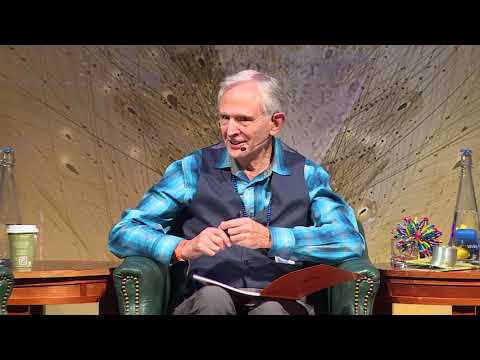
Peter Levine, founder of Somatic Experiencing and a prominent figure in trauma healing, and Thomas Hübl, a spiritual teacher and mystic focused on collective trauma, explore the intertwined relationship between trauma healing and spiritual growth. Together, they discuss how addressing trauma, both personal and collective, opens up pathways for spiritual expansion and alignment with life’s core principles.
Levine begins by explaining how trauma can act as a portal to spiritual experience without being a direct spiritual path. He uses the example of an impala facing a life-threatening encounter with a predator. The intense energy generated in the body during such threats doesn’t dissipate easily. In cases of trauma, this energy becomes “stuck” in the nervous system, causing individuals to remain frozen, unable to live fully in the present. Healing, then, requires a slow release of this energy, which Levine compares to a “titration” process, allowing for gradual integration and preventing overwhelming experiences such as premature spiritual awakenings. This gradual release enables individuals to reconnect with themselves, others, and the world, nurturing compassion, openness, and unity.
Both Levine and Hübl highlight the universal nature of trauma. Everyone, they argue, encounters trauma in various forms, from minor threats to major life events, making trauma work relevant to all. The unaddressed effects of trauma distort perceptions of reality, impacting how individuals relate to themselves and others. Hübl emphasizes that trauma prevents individuals from fully inhabiting the present, which is necessary for spiritual growth. Healing trauma, therefore, becomes a prerequisite for true presence and groundedness, which are essential for both spiritual practice and relational well-being.
Hübl also comments on the question often posed by people undertaking trauma work: “How long will it take?” This question, he explains, reflects a desire to escape the present moment. When someone is fully present, the concept of time fades away, underscoring that real healing lies in embracing the present, rather than rushing through or bypassing pain. Trauma healing, then, is not a timed process but a continual commitment to remaining in the here and now.
A significant part of the discussion centers on how trauma healing is essential for spiritual practice. Hübl notes that many people who are drawn to meditation have experienced significant trauma. However, some meditation practices can lead to dissociation rather than healing, creating a “bliss bypass” where individuals escape into euphoric states without confronting or integrating painful experiences. Levine asserts that spiritual growth involves holding both “light and darkness” — the contraction and expansion of life experiences. This balanced approach helps individuals avoid bypassing painful truths and instead fosters a non-dual awareness that can enrich spiritual practice.
The two experts also delve into the concept of collective trauma, noting that traumatic events and societal violence create an undercurrent of unresolved suffering within communities. Hübl emphasizes the importance of relational practices for healing collective trauma, as individual experiences are interconnected within a larger societal framework. In his work, he creates “coherent fields” where group presence and relational awareness allow for collective healing. In such a setting, trauma surfaces more visibly, allowing it to be addressed within a supportive, shared space.
This relational approach is key because, as Hübl states, trauma is often rooted in “broken connection” — with self, others, and the divine. Healing requires re-establishing these connections through intentional, precise relational practices. This type of work goes beyond individual transformation, creating a ripple effect that fosters a broader healing process within society. Hübl likens this to playing in an orchestra where each instrument must be in tune for harmonious resonance.
The concept of transgenerational trauma is also discussed, acknowledging that trauma isn’t limited to personal experiences but often reflects ancestral and societal suffering. For example, past societal traumas, such as wars or systemic violence, create layers of unresolved pain that impact current generations. Both Levine and Hübl stress the need for awareness of these layers, allowing individuals to work through both personal and ancestral trauma to alleviate suffering that spans generations.
Finally, the conversation touches on the distinction between personal and collective trauma, with Hübl noting that healing should start with the individual. When people attempt to tackle collective trauma without addressing their own wounds, they risk confusion and bypass their personal healing. Instead, working through personal trauma first lays the groundwork for individuals to expand their healing capacities and eventually engage with collective traumas more effectively.
In sum, Levine and Hübl’s dialogue underscores that trauma healing is a critical component of spiritual growth, enabling individuals to reconnect with their true selves, others, and a higher sense of purpose. By embracing both personal and collective trauma work, people can foster resilience and unity, contributing to a more compassionate and aware society. This approach to trauma as both an individual and collective journey highlights the potential for transformation on a societal level, nurturing a world rooted in connection, empathy, and spiritual presence.
Quote of the Day
“No mud, no lotus.” – Thich Nhat Hanh
Data
Yoga can help people with a history of psychological trauma by increasing self-compassion, developing coping skills, improving mind-body relationships, and enhancing relationships with others.
English, A., McKibben, E., Sivaramakrishnan, D., Hart, N., Richards, J., & Kelly, P. (2022). A Rapid Review Exploring the Role of Yoga in Healing Psychological Trauma. International Journal of Environmental Research and Public Health, 19. https://doi.org/10.3390/ijerph192316180.
Art

Meme of the Day

Thank you for reading. Until next time!
Peter & the Light Being team
p.s. If you liked this newsletter, share it with your friends and colleagues.
Receive a meditation lesson in your inbox daily for 21 days, and start practicing in 5 minutes every day.
Book • Podcast • Instagram • Youtube • Course
 Light Being ॐ
Leave a comment