Economic democracy extends beyond political democracy by addressing power dynamics within economic systems themselves. While political democracy focuses on voting rights and representation in governance, economic democracy seeks to distribute decision-making authority, ownership, and benefits throughout economic structures. This means transforming businesses, markets, and financial systems to empower workers, communities, and stakeholders rather than concentrating control in the hands of a few wealthy shareholders or executives. In practice, this might manifest through worker cooperatives, community-owned enterprises, participatory budgeting, and stakeholder governance models where those affected by economic decisions have meaningful input.
Establishing effective checks and balances for technocapitalism requires multi-layered approaches that constrain the growing power of technology corporations and algorithmic systems. This includes breaking up digital monopolies, implementing algorithmic accountability frameworks, establishing data rights and sovereignty principles, and creating public interest technology agencies with regulatory authority. With AI specifically, economic democracy would mandate transparency in development and deployment, require impact assessments before implementation, establish collective governance over AI systems with significant social impacts, and ensure that productivity gains from automation are distributed broadly rather than accruing primarily to capital owners.
Accounting must be reimagined in an economically democratic voting process. Traditional financial accounting prioritizes shareholder returns while externalizing social and environmental costs. A democratic alternative would implement multiple-capital accounting that values natural, social, human, and built capital alongside financial metrics. This creates a foundation for more holistic decision-making where stakeholders can vote based on comprehensive information about an organization’s true impacts. Public benefit accounting standards would require businesses to measure and report on their contributions to community wellbeing, ecological sustainability, and wealth distribution, with these metrics informing stakeholder voting rights.
The shift from a petrodollar to a solar-dollar system represents a profound reconfiguration of global economic power. While the petrodollar system ties currency value to fossil fuel extraction and geopolitical control of oil reserves, a solar-dollar would derive value from renewable energy production, storage, and efficient use. This transition creates opportunities for more distributed economic power as energy production becomes increasingly decentralized through local solar, wind, and other renewable installations. Countries with abundant renewable resources but limited fossil fuels could gain economic leverage, while accounting systems would need to track energy inputs, outputs, and transfers as fundamental units of value, potentially using blockchain and other distributed ledger technologies to ensure transparency and prevent manipulation.
Practical education must evolve to support this economic transformation by integrating ecological literacy, systems thinking, and creative problem-solving. Educational models would emphasize hands-on experience with regenerative agriculture, renewable energy systems, ecological design, and community organizing alongside traditional academic subjects. Students would learn entrepreneurship not primarily as a path to individual wealth accumulation but as a means of creating social and environmental value through innovative solutions to community challenges. This education would cultivate both technical competence and ethical frameworks for navigating complex societal transitions, helping people develop the confidence and capabilities to participate meaningfully in economic democracy.
The integration of these elements could create regenerative economic cycles where democratic decision-making directs resources toward meeting genuine human needs while respecting planetary boundaries. Distributed ownership structures would ensure that wealth generated through innovation serves communities rather than being extracted from them. Information systems would need to track and validate not just financial transactions but contributions to collective wellbeing, creating new metrics for economic success. Throughout this transition, maintaining public discourse about values, priorities, and trade-offs would be essential for navigating inevitable tensions between short-term interests and long-term flourishing.
Intergenerational Stewardship: Economic Democracy and the Shade of Future Trees
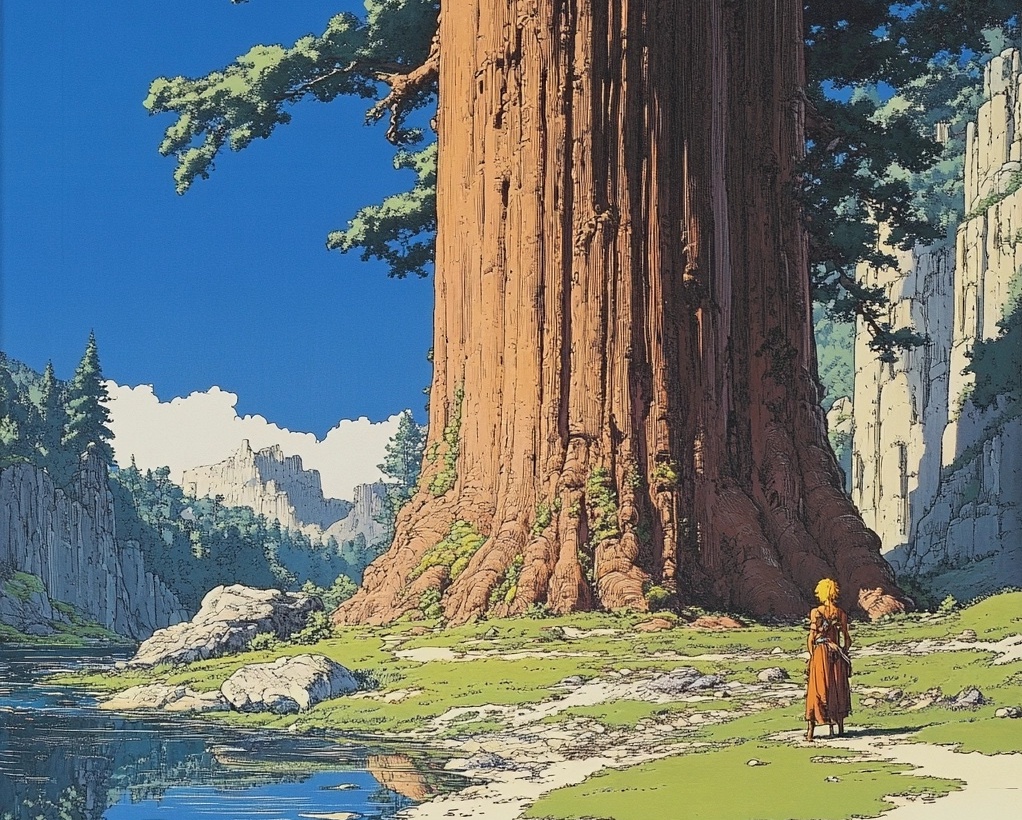
The indigenous wisdom of planting trees whose shade will benefit future generations embodies a profound economic philosophy that stands in stark contrast to our current extractive systems. This principle of intergenerational stewardship serves as a powerful foundation for economic democracy and the solar-dollar paradigm. When we reorient economic activities around creating value for those who come after us, we fundamentally transform how we conceptualize wealth, progress, and decision-making authority.
Economic democracy viewed through this indigenous lens prioritizes decisions that honor the seventh generation principle—considering how today’s choices will affect those living seven generations into the future. This approach requires economic institutions that can think beyond quarterly profits and electoral cycles, establishing governance structures where future stakeholders have representation in present-day decisions. Practical applications might include citizen assemblies with designated roles for youth representatives, constitutional protections for future generations’ rights, and investment frameworks that explicitly value long-term resilience over short-term returns. The voice of those who will inherit our decisions becomes an essential counterbalance to immediate self-interest.
The accounting systems of an intergenerationally just economy would incorporate time as a fundamental dimension of value. Current accounting practices heavily discount future benefits and costs, effectively treating long-term consequences as negligible. A regenerative approach would reverse this, recognizing that investments yielding multi-generational returns—like forest restoration, soil building, and cultural knowledge preservation—often create more substantial value than those producing immediate but ephemeral gains. This requires developing sophisticated ecological accounting methods that can track biological time scales of growth, maturation, and renewal alongside human economic cycles, creating new metrics that celebrate patience and nurturing rather than rapid extraction and consumption.
The solar-dollar system aligns naturally with indigenous temporal understanding, as it bases value on renewable flows rather than finite stocks. Just as traditional indigenous economies recognized that wealth comes from maintaining healthy relationships with continuously regenerating natural systems, a solar-based currency acknowledges that true abundance emerges from our relationship with ongoing solar energy flows. This shifts economic power toward those who cultivate these relationships through sustainable energy harvesting, storage, and transmission systems. Communities that invest in distributed renewable infrastructure create literal and figurative “shade” for future generations—providing both energy security and environmental protection against climate instability.
Practical education in this context becomes a form of intergenerational gift-giving, where each generation consciously develops and transmits knowledge that will enable future generations to thrive. This educational approach emphasizes not just technical skills but cultural practices that sustain human-nature relationships across time. Learning becomes cyclical rather than linear, with elders teaching youth who will eventually become elders themselves, each generation adding their insights while preserving core wisdom. Students would learn to identify which innovations truly serve long-term flourishing and which merely accelerate resource depletion or social fragmentation, developing discernment alongside creativity.
The indigenous tree-planting philosophy also illuminates the relationship between individual effort and collective benefit in economic democracy. When we plant trees knowing we may never rest in their shade, we practice a form of generosity that transcends transactional thinking. Similarly, economic democracy requires us to sometimes forego immediate personal gain to build systems that distribute benefits more widely and sustainably. This counters the hyper-individualism of contemporary capitalism, reconnecting economic activity with cultural values of reciprocity, sufficiency, and mutual care. Decision-making processes would explicitly incorporate these values, asking not just “What will this return to shareholders?” but “How will this nurture the community that our descendants will inherit?”
Implementing these principles requires reimagining property rights and resource governance. Many indigenous traditions view land, water, and other life-sustaining resources not as possessions but as relatives with whom humans maintain responsible relationships. Economic democracy informed by this perspective would establish new legal frameworks recognizing the rights of ecosystems themselves and the obligations of current users to preserve options for future generations. Community land trusts, watershed cooperatives, seed-saving networks, and other commons-based institutions would proliferate, creating protected spaces where multi-generational stewardship can flourish outside market pressures. These institutions would develop governance practices that deliberately slow certain decisions, ensuring that actions with long-term consequences receive appropriately thoughtful consideration.
The metaphor of planting trees for future shade also addresses the justice dimensions of economic transformation. It acknowledges that the benefits of today’s sacrifices and investments will not be evenly distributed across time and space. Some communities—particularly those who have historically been exploited or marginalized—may need additional support during transition periods, just as some land requires more intensive care to reestablish forest cover. Economic democracy must therefore incorporate restorative elements that address historical inequities while building toward more equitable futures. This might include reparations programs, preferential investment in historically underserved communities, and special protection for lands and cultural practices of indigenous peoples who have maintained intergenerational wisdom despite centuries of disruption.
This vision of economic democracy rooted in indigenous wisdom offers a path beyond the false choice between technological progress and ecological harmony. It suggests that the most sophisticated economies will be those that successfully integrate advanced technologies with ancient wisdom about living well within natural limits. The solar-dollar becomes not just an alternative currency but a symbol of this integration—harvesting the most advanced forms of energy capture while honoring the oldest understanding that all wealth ultimately flows from our relationship with the sun, soil, water, and air that sustain life across generations.
The Myth of the Solar Tree: A Modern Fable of Economic Rebirth
In the time after the Great Unraveling, when the towers of the oil barons had crumbled and the waters had risen to reclaim the shorelines of memory, there lived a woman named Solara. She had been born in the final days of the Age of Extraction, when the last of the ancient sunlight was being pulled from the depths of the earth and burned in a frenzy of forgetting. Her parents had named her in hope, not knowing if their prayer would be answered.
Solara grew up listening to the elders speak of a world that once was—of oceans teeming with life, of forests that stretched beyond sight, of glaciers that reflected the sun like mirrors of eternity. But she had never seen these wonders. Her world was one of dust storms and erratic rains, of refugee camps and rationed water. The elders called it the Accounting—the time when all debts to the earth came due at once.
As a child, Solara discovered an ancient book in the ruins of what had once been a university library. Most of its pages had been consumed by mold, but one passage remained legible: “A society grows great when old men plant trees in whose shade they know they shall never sit.” She carried these words with her, turning them over in her mind during the long nights when heat made sleep impossible.
The Three Seeds
On her eighteenth birthday, Solara left her settlement, venturing into the world to seek understanding. She carried with her only a water flask, a solar panel woven into her jacket, and three seeds wrapped in a cloth that had belonged to her grandmother.
Her journey took her first to the Western Territories, where the technologists had retreated when the old systems failed. There, in a valley protected by mountains, they had built gleaming cities powered by immense arrays of solar collectors. They called their new currency the Kilowatt, and they traded in units of energy rather than abstract wealth. Their algorithms optimized every aspect of life for efficiency, and their artificial minds worked constantly to solve the problems of survival in a damaged world.
The Master of Algorithms welcomed Solara, impressed by her questions and her determination. “Stay with us,” he offered. “Our systems can allocate resources perfectly, ensuring that nothing is wasted. We have achieved what the old world could not—a society without hunger, without waste, without conflict over resources.”
Solara observed their world for a season. She saw how the solar arrays captured the energy of the sun, how the desalination plants produced clean water, how the vertical farms yielded abundant food. But she also noticed how the citizens moved through their days like components in a machine, their decisions guided always by the optimal path calculated by the Master’s algorithms. They had survived, yes, but something essential seemed to be missing.
Before departing, Solara planted her first seed in the central plaza of the technologists’ city. “What is this?” asked the Master of Algorithms.
“A tree,” replied Solara. “One that will grow for centuries.”
“But our calculations show that space would be better used for additional energy collectors,” protested the Master.
“Some values cannot be calculated,” said Solara, and continued on her way.
The Voice of the Assembly
Her path next led her to the Eastern Forests, where communities had formed around the remnants of ancient woodlands. These people governed themselves through assemblies where all had voice, making decisions by consensus rather than command. They lived simply, harvesting the forest’s bounty without depleting it, building homes from living trees that continued to grow and breathe.
The Speaker of the Assembly greeted Solara with a cup of clean water—the most precious gift in a parched world. “We have been expecting someone like you,” she said. “The dreams told us to watch for a traveler with ancient wisdom.”
Solara lived among these people for a season, learning their ways. She participated in their assemblies, where even the youngest children had the right to speak, where decisions were tested against the question: “How will this affect the seventh generation after us?” She saw how they had divided ownership so that none could accumulate too much while others had too little, how they rotated leadership so that power never consolidated in a single pair of hands.
“This is beautiful,” Solara told the Speaker. “You have created true democracy—not just in governance but in your economic life as well.”
“Yet we remain small,” admitted the Speaker. “Our ways do not scale easily to larger communities. And we lack the technology to heal the most damaged parts of our world.”
Before departing, Solara planted her second seed at the center of their meeting grove. “This tree carries memories,” she told the Assembly. “Care for it, and it will teach you things forgotten by your ancestors but remembered by mine.”
The Keepers of Memory
Solara’s final journey took her northward, to a land where indigenous peoples had reclaimed territories once stolen from them. Having maintained their traditional knowledge through centuries of oppression, they now found themselves the custodians of wisdom desperately needed in a world experiencing collapse.
The Council of Elders received Solara with neither the enthusiasm of the Technologists nor the warm familiarity of the Assembly dwellers. They observed her in silence, waiting to understand her purpose.
“I have come to learn,” Solara said simply.
For a full cycle of seasons, Solara lived among the Keepers of Memory. She learned their language, which contained concepts absent from the tongues of other peoples—words for the reciprocal obligations between humans and the living world, terms for types of time that moved in cycles rather than lines, expressions for forms of wealth that could neither be hoarded nor depleted through use.
From the Grandmother of Seeds, Solara learned how the ancient varieties of food plants contained genetic memories of past climate shifts, adaptations that would be needed again. From the Father of Watersheds, she learned how to read the language of rivers and clouds, how to call the rains through ritual and careful tending of the land. From the Children’s Council, she learned how the youngest members of the community were taught to imagine the future by speaking regularly with their own unborn descendants through ceremony and dream.
“Your ways are powerful,” Solara told the Elders. “You have maintained relationship with the living world even as others forgot they were part of it.”
“Yet we too are vulnerable,” replied the Head of Council. “The changes come faster than our traditions can adapt. And many young ones are drawn away by the promise of easier lives elsewhere.”
Before departing, Solara planted her final seed in the center of their ceremonial grounds. “This tree comes from a place far from here,” she explained. “Yet it will thrive in your soil, as wisdom from different traditions can flourish when planted with respect.”
The Confluence
When Solara had completed her journeys, she found herself drawn to a place where three rivers met—one flowing from the technologists’ territories, one from the assembly peoples’ forests, and one from the lands of the memory keepers.
Understanding the significance of this confluence, Solara built a simple dwelling on an island at the rivers’ meeting point. Word of her presence spread, and soon pilgrims from all three communities began to arrive, curious about this woman who had walked among them all and left mysterious trees growing in their midst.
The first to visit was a young technologist who had become fascinated by the tree growing in his city’s plaza—a tree that the algorithms had repeatedly recommended removing, yet which the Master had protected out of respect for Solara’s parting words.
“Our sensors detect unusual patterns in this tree’s electromagnetic field,” the technologist reported. “It seems to be communicating in ways our science doesn’t yet understand.”
Next came a group of children from the Assembly communities, sent as representatives because they would live longest with whatever knowledge Solara might share.
“Our tree has begun to fruit,” said their spokesperson, a girl barely ten years old. “The fruits contain seeds unlike any in our forest’s memory. And when we eat them, we dream of machines that breathe like plants and buildings that heal themselves like skin.”
Finally, a delegation arrived from the Keepers of Memory, led by a young man who had been appointed Translator of New Wisdom.
“The tree you planted has begun to sing,” he told Solara. “Not with sound that ears can hear, but with vibrations that our dreamers can translate. It sings of a currency backed not by dead fossils but by living light.”
The Solar Dollar
Solara listened to all who came, recognizing that each group had received exactly the message they needed most—the technologists had discovered mystery where they expected only data; the assembly dwellers had found innovation where they valued tradition; the memory keepers had encountered future possibility where they preserved past knowledge.
“The trees are not separate gifts,” Solara explained to the gathered representatives. “They are parts of a single organism, sending roots beneath your territories to connect what has been divided. Just as your communities must now connect if any are to thrive.”
Over the following seasons, delegates from all three societies began regular gatherings at the Confluence. Under Solara’s guidance, they created a new kind of exchange system—one that honored the technologists’ understanding of energy flows, the assembly dwellers’ commitment to distributed decision-making, and the memory keepers’ recognition of obligations to future generations.
They called it the Solar Dollar, though it existed not as metal or paper but as a living accounting of relationship. Each community contributed its unique strengths: the technologists provided renewable energy infrastructure and communications networks; the assembly people offered governance models that prevented accumulation of excessive power; the memory keepers shared agricultural practices that regenerated soil and watershed health rather than depleting them.
The Solar Dollar derived its value not from scarcity or military might, but from the abundance of relationships properly tended. Communities that restored forests saw their currency strengthen as carbon was sequestered. Neighborhoods that installed solar gardens watched their economic security grow with each kilowatt generated. Schools that taught children to combine digital skills with ecological knowledge became wealthy nodes in the network as their graduates created innovations that enhanced the system’s resilience.
The Great Remembering
As the Solar Dollar system spread beyond the three founding communities, something unexpected began to occur. The reinforcing feedback loops of the old economy—which had rewarded extraction, exploitation, and externalization of costs—were gradually replaced by new patterns that recognized different forms of wealth creation.
Farmers who rebuilt topsoil found themselves respected as primary producers of true value. Teachers who cultivated wisdom rather than just job skills became recognized as essential economic contributors. Carers who maintained the health of the vulnerable were compensated as generously as those who built machines or wrote code.
This transformation did not occur without resistance. In some regions, those who had hoarded wealth under the old system attempted to capture the new one, creating artificial scarcities where abundance was possible. In others, people clung to familiar patterns of consumption even as they adopted the language of regeneration.
When such challenges arose, Solara would remind people to look to the trees—now growing tall in dozens of communities—and remember that true wealth grows slowly, creates habitat for countless others, and produces fruit that nourishes rather than depletes.
“The Solar Dollar is not merely a new currency,” she would explain. “It is a new covenant with time itself—one that honors the ancient sunlight stored in fossil fuels by using it carefully during the transition, while building systems that can thrive on each day’s new sunlight indefinitely.”
The Elder’s Gift
As years passed and the new economy took root across the damaged but healing world, Solara grew old. The trees she had planted reached maturity, their branches now providing shade for children who had never known the Age of Extraction except through stories.
On her final birthday, representatives from hundreds of communities gathered at the Confluence to honor the woman who had helped birth their new world. They brought gifts symbolizing the abundance that had begun to return—clear water from once-polluted rivers, grain from fields that had been desert, honey from forests growing on abandoned extraction sites.
“You have given us so much,” said a young woman who had been born in the year Solara planted the first tree. “What can we possibly offer in return?”
Solara smiled, her face as weathered as the bark of an ancient oak. “You have already given me everything I sought—the knowledge that my great-grandchildren will live in a world more beautiful than the one I was born into. But if you wish to give me a final gift, do this: plant trees whose shade you will never sit beneath, create institutions whose fruits you will never taste, imagine technologies whose potential you will never fully witness.”
That night, beneath a sky clearer than any seen in generations, Solara passed peacefully into whatever mystery awaits beyond life. In accordance with her wishes, her body was buried at the exact center point between the three original trees, which had grown so large that their branches now intertwined above the rivers’ confluence.
The Living Legacy
In the centuries that followed, the Solar Dollar system evolved in ways Solara could not have predicted but would have recognized as true to her vision. As climate patterns stabilized and ecosystems regenerated, human communities discovered new forms of prosperity that required neither endless growth nor constant technological acceleration.
The three founding societies transformed as well. The technologists learned to create algorithms that optimized for relationship rather than mere efficiency, incorporating values that could not be quantified but could be sensed and honored. The assembly dwellers developed governance models that could function at planetary scale without sacrificing the voice of the individual or the wisdom of the local. The memory keepers found ways to integrate new knowledge without losing the thread of ancient understanding that connected them to the living world.
Most significantly, the artificial boundaries between these approaches dissolved. Children grew up moving freely between technical mastery, democratic participation, and ecological intimacy, recognizing these not as separate domains but as aspects of a single integrated way of being human in relationship with a living planet.
And at the heart of this new civilization stood the descendants of Solara’s three trees—now a sprawling forest that had spread along the riverbanks in all directions. Within this forest, the most important decisions were made, not because anyone commanded it, but because something in the presence of these trees helped people access their highest wisdom and longest vision.
Scientists of later generations would discover that the trees indeed communicated across vast distances, sharing information about soil conditions, weather patterns, and even human activities through their interlinked root systems and the fungi that connected them. What had seemed mystical to early observers was revealed as biological fact—the trees were a living network, constantly adapting and evolving in response to their environment.
Just as the Solar Dollar had become a living nervous system for human exchange, measuring and responding to the health of relationships between people and planet.
Just as democracy had evolved from a periodic voting ritual to a continuous process of collective sensing and responding.
Just as education had transformed from the transmission of fixed knowledge to the cultivation of adaptive intelligence.
Solara’s legacy lived not as a static monument but as a dynamic, evolving system—a civilization that had learned to think like a forest, measuring success not in quarterly returns but in centennial flourishing, finding security not in domination but in diverse relationship, creating abundance not through extraction but through participation in the continuous gift economy of the living Earth.
And on especially clear nights, when sunspots sent waves of aurora dancing across the northern skies, the elders would gather children beneath the great trees and tell them the story of the woman who had planted the first seeds of their world. Not because she had been perfect or all-knowing, but because she had been brave enough to act without certainty, generous enough to give without expectation of return, and wise enough to trust the indigenous understanding that true wealth grows in the shade of trees planted for those yet to come.
 Light Being ॐ
Leave a comment