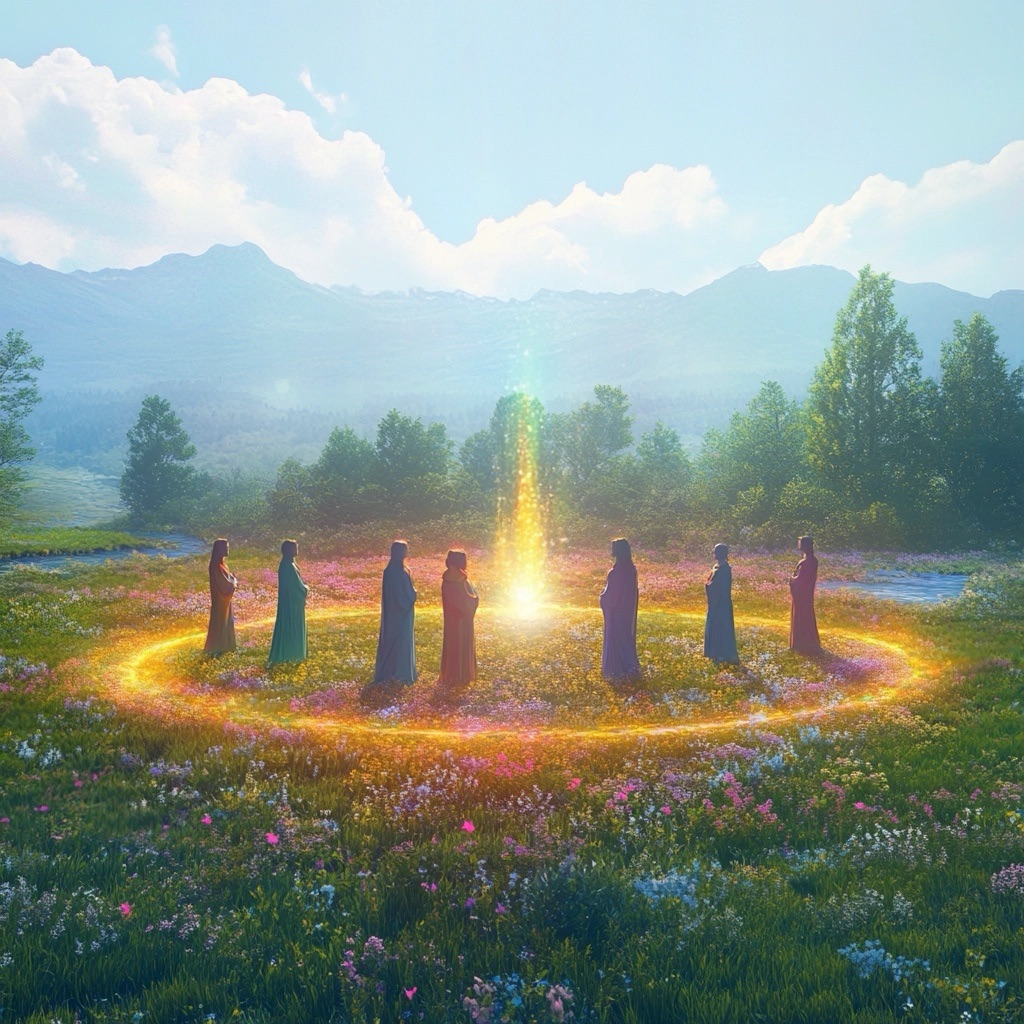
The narrative of beings from the stars who visit Earth, imparting wisdom and shaping human development, appears with remarkable consistency across diverse cultures separated by vast distances and time periods. These “star people” stories share striking commonalities that transcend geographical boundaries, suggesting either a universal psychological archetype or possibly shared experiences that have been interpreted through cultural lenses.
In Mesopotamia, the Sumerians—creators of one of humanity’s earliest writing systems—described the Anunnaki in their cuneiform texts as divine beings who descended from “Nibiru” or the heavens. The Epic of Gilgamesh and Enuma Elish detail how these entities taught humans agriculture, mathematics, writing, and architectural knowledge. The Anunnaki were often depicted with symbols of advanced knowledge and were credited with establishing the first cities and kingdoms of ancient Mesopotamia.
Similar accounts emerge from ancient Egypt, where hieroglyphic texts describe the “Neteru”—divine beings who arrived in “boats of heaven” to establish civilization along the Nile. The Egyptian deity Thoth, portrayed with the head of an ibis, was venerated as the bringer of writing, mathematics, and astronomy. The precise astronomical alignments of structures like the Great Pyramid of Giza demonstrate knowledge that, according to conventional archaeology, would have been difficult to achieve with the technology of the time.
Half a world away, the Maya civilization developed remarkably similar myths. Their deity Kukulkan (known as Quetzalcoatl to the Aztecs) was described as a fair-skinned, bearded figure who arrived from the stars to teach agriculture, astronomy, and mathematics. Mayan codices depict Kukulkan departing with a promise to return, a narrative that influenced their sophisticated calendar system that tracked celestial movements with astonishing precision. The Popol Vuh, the Mayan creation text, specifically mentions that humans were created after multiple attempts by star beings to fashion suitable companions.
In North America, the Hopi speak of the Kachinas—spiritual beings who reside in the mountains and visit the Hopi villages during half of the year. According to their oral tradition, these beings came from the stars to guide human development. The Lakota Sioux traditions include detailed accounts of star people, or “Star Nations,” who interact with humans through ceremonies and vision quests. Black Elk, the famous Lakota holy man, described journeys to the “sky world” where he received knowledge from these celestial beings.
The Aboriginal peoples of Australia maintain the world’s oldest continuous cultural traditions, dating back at least 65,000 years. Their cosmology includes the Wandjina—cloud and rain spirits who came from the Milky Way in the Dreamtime. Aboriginal rock art depicts these beings with large eyes, no mouths, and heads surrounded by circles interpreted as helmets or halos. These Wandjina are credited with bringing important knowledge and establishing sacred law.
In Africa, the Dogon tribe of Mali has attracted significant scholarly attention for their astronomical knowledge. They possessed detailed information about the Sirius star system, including knowledge of Sirius B, a companion white dwarf star invisible to the naked eye. The Dogon described this star’s 50-year orbital period and its extremely dense composition centuries before Western astronomers confirmed these facts with telescopes in the 20th century. According to the Dogon, this knowledge came from the Nommo, amphibious beings who arrived from the Sirius system in a “spinning vessel accompanied by fire and thunder.”
The native Hawaiians speak of the ‘Ao’ao, sky beings who came from the Pleiades star cluster. In their traditions, these beings taught navigation techniques that enabled Polynesian wayfinders to travel thousands of miles across open ocean using only the stars, winds, and currents—an impressive feat that puzzled Western explorers when they first encountered it.
In South America, the Inca civilization venerated beings called the Viracochas, described as tall figures with fair skin who emerged from Lake Titicaca after a great deluge to restart civilization. They were credited with teaching agricultural techniques that allowed cultivation in the challenging terrain of the Andes Mountains. The massive stone structures at sites like Sacsayhuamán were attributed to knowledge these beings imparted.
Asian traditions contain similar accounts. Ancient Chinese texts describe the “sons of heaven” who descended in “flying dragons” to impart knowledge to early emperors. In Japan, the Dogu figurines of the Jomon period (14,000-400 BCE) depict beings with large eyes and what appear to be helmets or space suits. Japanese folklore includes accounts of the Amatsukami, celestial deities who descended from the heavens to establish the imperial lineage.
In India, the ancient Sanskrit texts known as the Vedas describe the “vimanas”—flying machines used by deities. The Mahabharata and Ramayana contain accounts of aerial vehicles, advanced weapons, and beings with godlike powers who intervened in human affairs. These texts describe technological capabilities that would not be achieved by modern humans until the 20th century.
What makes these cross-cultural accounts particularly compelling are the shared elements that appear consistently:
- Mode of Arrival: Nearly all traditions describe the star people arriving in craft that descend from the sky, often accompanied by light, sound, or fire.
- Physical Characteristics: Star beings are frequently described as taller than humans, with unusual skin (often pale or blue), large eyes, and sometimes wearing special garments or helmets.
- Knowledge Transfer: Across cultures, these visitors are credited with teaching specific technologies: agriculture, irrigation, mathematics, astronomy, medicine, and construction techniques.
- Moral Guidance: Star people typically impart ethical systems and social organization principles alongside technical knowledge.
- Promise of Return: Many traditions include a narrative of the beings departing with a promise to return at a significant moment in human development.
- Specific Celestial Origins: Rather than generic “sky” origins, many traditions identify specific star systems—particularly the Pleiades, Sirius, and Orion—as the home of these beings.
- Construction Assistance: Monumental structures like pyramids, massive stone temples, and precisely aligned astronomical sites are often attributed to knowledge or direct assistance from star people.
Anthropologists have traditionally explained these similarities through cultural diffusion or as expressions of archetypes emerging from the collective human psyche, as Carl Jung might suggest. Joseph Campbell, the renowned comparative mythologist, identified the “hero’s journey” pattern across world mythologies but noted that star people narratives contained unique elements that didn’t fit neatly into this framework.
The astronomical knowledge embedded in many of these traditions presents a particular puzzle. The Dogon’s knowledge of Sirius B, the Mayans’ precise tracking of Venus, and the Aboriginal understanding of celestial mechanics all contained information that, according to conventional understanding, should have been impossible to obtain without modern telescopes. This has led some researchers to consider whether these traditions might preserve actual encounters interpreted through cultural frameworks.
Communities that maintain these traditions today often express frustration with academic interpretations that dismiss their literal understanding of star people. Many indigenous knowledge keepers maintain that these were not metaphorical stories but accounts of real interactions preserved through oral tradition. As the late Lakota elder Arvol Looking Horse explained: “Our star relatives have been with us since the beginning. This is not mythology to us—it is our history and our continuing relationship.”
Modern astronomical discoveries lend an interesting dimension to these ancient accounts. We now know that Earth-like planets are common in our galaxy, with the potential for life existing on billions of worlds. The physics of interstellar travel, while challenging, does not prevent advanced civilizations from developing technologies that could span these vast distances, particularly over evolutionary timeframes of millions of years.
The persistence of star people narratives in contemporary indigenous cultures demonstrates their continued relevance. Many traditions include prophecies about a time when the star people would return or when their teachings would become crucial for human survival—often described as a period of environmental crisis and technological advancement similar to our current era.
Whether interpreted as literal history, symbolic mythology, or some combination of both, these cross-cultural accounts of star people constitute one of humanity’s most widespread and enduring narrative patterns. They bridge cultural divides, connect us to our ancestors, and continue to inspire our modern quest to understand our place in the cosmos and whether we are alone in this vast universe.
 Light Being ॐ
Leave a comment