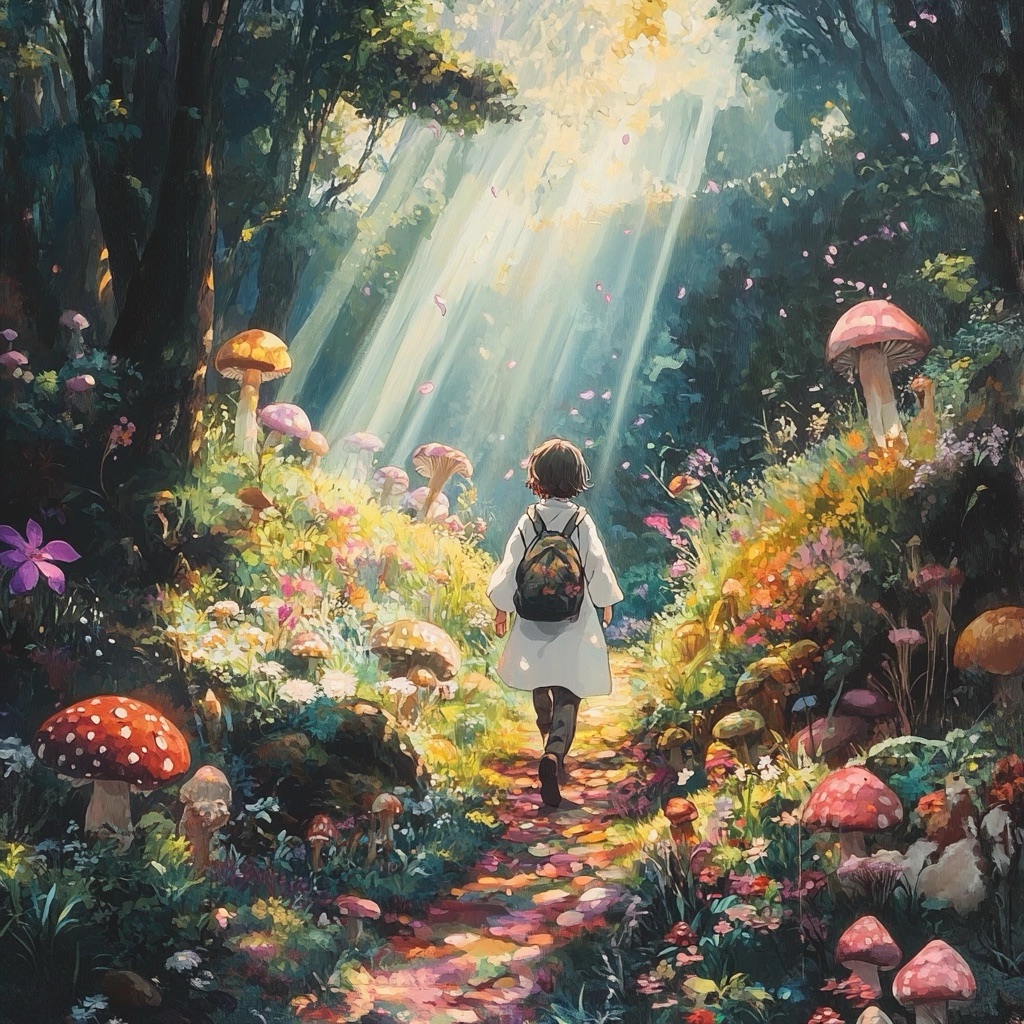
The Hidden Kingdom That Heals
Fungi represent the third kingdom of life, distinct from both plants and animals, with over 5 million species estimated to exist—though we’ve identified just 150,000. This vast unexplored kingdom holds secrets that could revolutionize how we heal our planet and ourselves.
Paul Stamets, perhaps mycology’s most visionary figure, describes mycelium as “Earth’s natural internet”—a description that goes beyond metaphor. The mycelial network functions remarkably like both our internet and our brain, with nodes and connections that process information and share resources.
A single cubic inch of soil can contain over eight miles of mycelial cells, and these networks can extend signals over vast areas spanning thousands of acres.
These sophisticated systems demonstrate rudimentary decision-making capabilities when faced with obstacles or resources, and some networks have persisted for thousands of years, making them among the oldest living organisms on Earth.
The underground mycelial network that Stamets calls the “neurological network of nature” transfers information between plants, creating what scientists now recognize as the “Wood Wide Web”—a communication system that allows forests to function as superorganisms rather than collections of individual trees.
Mycoremediation: Nature’s Master Chemists at Work
The fungi kingdom possesses unparalleled chemical engineering capabilities, producing powerful extracellular enzymes that can dismantle complex molecular structures.
Oyster mushrooms (Pleurotus ostreatus) can break down 95% of many petroleum compounds in just 8 weeks. After the 2007 San Francisco Bay oil spill, mycologists placed oyster mushroom-inoculated straw along beaches, dramatically accelerating cleanup.
The process works through powerful enzymes like laccase and peroxidase that break carbon-hydrogen bonds. Unlike many human remediation techniques, the end products are primarily water, carbon dioxide, and fungal biomass rich in protein and nutrients—creating food rather than secondary waste.
Recent discoveries show certain fungi can digest plastics previously thought indestructible. Pestalotiopsis microspora can subsist on polyurethane in both aerobic and anaerobic conditions, while Aspergillus tubingensis can break down polyester polyurethane in just two months.
These fungi don’t just break plastics into microplastics but completely mineralize them into base compounds.
The chemical genius of fungi extends to neutralizing some of humanity’s most dangerous creations. The turkey tail mushroom (Trametes versicolor) can break down chlorinated compounds like PCBs and dioxins, certain Psilocybe species can detoxify organophosphate pesticides, and white rot fungi can degrade TNT and other explosive compounds in soil.
Radiation Remediation: The Melanin Miracle
Perhaps most astonishing is fungi’s relationship with radiation. After the Chernobyl disaster, scientists discovered several melanin-rich fungi growing toward the radiation source rather than away from it.
These “radiotropic fungi” appear to convert gamma radiation into chemical energy for growth, similar to how plants use photosynthesis.
Laboratory tests confirm these fungi can reduce radioactive contamination in soil by up to 80%.
NASA is now studying these fungi for potential use in space radiation shielding for long-duration missions, recognizing their unique protective capabilities that could benefit human exploration beyond our planet.
Medicinal Marvels: From Forest Floor to Pharmacy
The same fungi that heal ecosystems offer profound benefits for human health.
Turkey tail mushroom (Trametes versicolor) contains polysaccharide-K (PSK), an FDA-approved anticancer agent in Japan used as a complementary treatment for various cancers.
Lion’s mane (Hericium erinaceus) stimulates nerve growth factor production, potentially reversing neurological damage and improving cognitive function.
Reishi (Ganoderma lucidum) contains over 400 bioactive compounds that modulate immune function and reduce inflammation.
Penicillin, our first major antibiotic, came from the Penicillium fungi.
Agarikon (Fomitopsis officinalis), an ancient forest mushroom, contains novel antivirals effective against influenza, smallpox, and herpes viruses.
Many forest mushrooms produce antimicrobial compounds specifically effective against soil bacteria—which happen to include many human pathogens since we evolved in close contact with soil.
Recent research reveals the profound connection between environmental and internal fungi. The human microbiome includes approximately 200 species of fungi that influence immunity, digestion, and mental health.
Environmental exposure to diverse fungi strengthens our internal fungal communities.
People living in areas with greater fungal biodiversity typically show more robust immune responses and lower rates of allergies and autoimmune conditions.
Practical Applications: Bringing Mushrooms Into Everyday Life
Communities worldwide are deploying fungi to address local pollution. In urban areas, mushroom-growing kits are being used to remediate lead-contaminated soil in community gardens.
“Mycofiltration” systems—essentially soil filters infused with mycelium—are being installed along waterways to capture agricultural runoff and E. coli before they enter water systems.
Mushroom cultivation on coffee grounds and agricultural waste diverts tons of material from landfills while producing nutritious food.
Fungi are transforming how we make things. Mycelium-based packaging materials are fully compostable alternatives to Styrofoam.
Mycelium “leather” offers a sustainable alternative to animal hides without the environmental impact of plastic-based vegan leathers.
Fungal building materials can be grown rather than manufactured, with superior insulation properties and fire resistance.
Anyone can participate in this mycelial revolution. Home mushroom gardens can remediate backyard soil while producing food.
“Mycorrhizal gardening” techniques enhance plant growth while sequestering carbon and improving soil quality.
Foraging (with proper training) connects people to fungal ecology while providing nutritious, local food sources.
The Philosophical Mycelium: Transforming Human Perspective
Fungi challenge our perception of individuality. Mycorrhizal networks demonstrate that even supposedly distinct organisms function as parts of larger systems.
The discovery that trees share resources through fungal networks—with older “mother trees” supporting younger trees—disrupts competitive evolutionary narratives.
Understanding that humans host hundreds of fungal species redefines where “self” ends and “other” begins.
Fungi embody circular systems rather than linear processes. In fungal-dominated ecosystems, nothing is waste—all materials cycle continually.
By connecting decomposition directly to new growth, fungi demonstrate that death and decay are not endpoints but transformative phases. This perspective offers a template for human economies and societies beyond extractive models.
Fungi force us to expand our understanding of intelligence. Slime molds (technically protists but studied alongside fungi) can solve optimization problems faster than sophisticated computers.
Mycelial networks demonstrate decision-making, memory, and learning without neurons or central processing.
These discoveries suggest intelligence may be an emergent property of networked systems rather than requiring human-like neuroanatomy.
Startling Facts That Change How We See Fungi
The largest organism on Earth is a honey fungus in Oregon covering 2,385 acres, estimated to be 2,400-8,650 years old.
A single portobello mushroom can release up to 16 billion spores per day, and some fungal spores can remain viable for decades or even centuries.
Fungi produce vitamin D when exposed to sunlight, just as human skin does—they are the only non-animal organisms to do so.
Some fungi can survive in space, with species like Cladosporium sphaerospermum actually using radiation to grow on the International Space Station.
Fungi have been found living inside nuclear reactors, inside rocks in Antarctica, and in other environments previously thought uninhabitable.
The “Death Cap” mushroom contains compounds being studied as targeted cancer treatments—demonstrating that even toxic fungi offer medical potential.
The Mycelial Path Forward
The mycological revolution offers not just technological solutions but a fundamentally different way of understanding our place in the world.
By studying and collaborating with fungi, we gain both practical tools for environmental restoration and conceptual models for more harmonious human systems.
The fungi kingdom—older than both plants and animals—may hold the wisdom our relatively young species needs to mature past our current environmental crisis.
By understanding that we exist within, rather than separate from, the web of life that fungi help create and maintain, we can transform our relationship with the living world from exploitation to participation.
In the mycelial model, we find a powerful alternative to both cutthroat competition and rigid control—a middle path of collaborative adaptation that may represent our best hope for thriving in an uncertain future.
By bringing mushrooms into our communities, homes, and thinking, we participate in an ancient wisdom that has sustained life on Earth through five mass extinctions.
The sixth great extinction—the one currently underway—may be the first that fungi alone cannot address. But by aligning human ingenuity with fungal intelligence, we may yet find our way to a more resilient and regenerative future.
 Light Being ॐ
Leave a comment