-
Healthcare Breathwork Programs: Clinical Evidence Meets Business Case
Breath-based wellness programs have achieved clinical validation sufficient to justify healthcare system investment, with documented healthcare cost reductions of $724 to $2,000 per participant annually and effect sizes comparable to established medical treatments. The convergence of 45+ years of MBSR research, emerging Kriya Yoga clinical trials, and formalized yoga therapy credentialing has created an evidence…
-
Yoga by Body System: Clinical Evidence & Applications
Cardiovascular System Yoga reduces blood pressure by 11/6 mmHg—equivalent to some medications—and decreases cardiac events by 43%. Heart rate variability improves by 40%, indicating better autonomic balance. Practitioners show cardiovascular aging markers 9 years younger than their chronological age. Key Practices: Coherent breathing (5 breaths/minute) reduces BP by 5-15 points within 8 weeks. Legs-up-wall decreases…
-
Raw Cannabis Medicine: How THCa and CBDa Work as a Natural Anti-Inflammatory
The Basic Difference: Raw vs. Heated Cannabis THCa and CBDa are the natural forms found in raw, fresh cannabis plants. When you heat cannabis (smoking, vaping, cooking), these transform into THC and CBD. The raw versions work completely differently in your body—they don’t make you high, but they’re much more powerful at reducing inflammation throughout…
-
Evidence-Based Natural Medicine: Clinical Data and Cost Benefits
Mind-body and natural medicine modalities demonstrate measurable clinical efficacy with substantial healthcare cost implications. A landmark Harvard/MGH study found mind-body interventions reduced healthcare utilization by 43%, while research across breathwork, herbal medicine, biofeedback, and emerging therapies reveals consistent medium-to-large effect sizes for stress, pain, and chronic disease management—often matching pharmaceutical treatments with fewer side effects.…
-
How Yoga Heals: The Science Behind an Ancient Practice
The human body operates as an intricate communication network where the brain, hormones, and nervous system constantly exchange signals that determine our health. Modern science has revealed that yoga works by fundamentally reorganizing these communication pathways, offering measurable healing benefits that ancient practitioners understood intuitively but that researchers can now document with precision. The Stress…
-
Conscious Connection, Celebration & Relaxation: The Science Behind Ancient Wisdom
For most of human history, we didn’t need alcohol to connect, celebrate, or relax. Our ancestors gathered around fires, drummed and danced until dawn, breathed together in ceremony, and accessed profound altered states through their own biology. Then, roughly 10,000 years ago, we discovered fermentation. Within a few millennia, this discovery had reshaped human culture…
-
Integrating Breath Meditation Biofeedback with Medical Insurance CPT Code
The Physiological Foundation Breath controls multiple body systems simultaneously through measurable mechanisms. Jack Shields’ 1979 research documented that deep diaphragmatic breathing moves lymph fluid 15 times more effectively than any other mechanism. The diaphragm descending 10 centimeters creates negative thoracic pressure (minus 6-10 mmHg) that draws lymph through the thoracic duct at 60-190 milliliters per…
-
The Biology of Understanding: How Curiosity Transforms Conflict
In the 1970s, psychologist John Gottman began filming couples in what became known as the “Love Lab.” He discovered he could predict divorce with over 90% accuracy—not by whether couples fought, but by how they fought. The difference wasn’t the issues they faced, but a subtle quality in their interactions: couples who stayed together asked…
-
Meditation and Applied Neuroscience: Research Implications and Directions
Historical Context and Scientific Evolution The scientific investigation of meditation represents a remarkable convergence between ancient contemplative traditions and modern neuroscience. What began as scattered physiological observations in the 1960s has evolved into a rigorous research domain that challenges fundamental assumptions about neural plasticity, consciousness, and the modifiability of mental processes throughout the lifespan. Early…
-
Kriya Yoga: An Engineering Approach to Consciousness
The story of Kriya Yoga reaching Western scientific and business minds begins with an unlikely bestseller. In 1946, an Indian monk named Paramahansa Yogananda published Autobiography of a Yogi, a work that would eventually influence figures from George Harrison to Steve Jobs. Jobs famously arranged for copies to be distributed at his memorial service, considering…
-
The Somatic Turn: How Science Rediscovered What Yogis Always Knew About Emotional Integration
For most of the twentieth century, Western psychology operated under a fundamental assumption: the mind could heal itself through insight and cognition alone. Sigmund Freud’s talking cure dominated therapeutic practice, followed by cognitive-behavioral approaches that emphasized thought pattern modification. Emotions were treated as epiphenomena of cognition, problems to be solved through rational analysis. The body,…
-
The Quiet Power of Being Enough
You don’t need to earn your worth. You don’t need to optimize yourself into acceptability. You don’t need to achieve, accumulate, or transform before you’re allowed to take up space in this world. You are enough. Right now. Exactly as you are. This isn’t a consolation prize. It’s not what we tell people who’ve failed…
-
The Science of Breath as Medicine: Pranayama’s Clinical Promise
For millennia, yogic traditions have prescribed specific breathing practices—pranayama—as fundamental medicine, yet only recently has Western science begun documenting the remarkable physiological cascades these techniques trigger. The concept of “breath prescriptions” represents a convergence of ancient empirical wisdom and modern clinical research, offering accessible interventions for conditions ranging from chronic inflammation to metabolic dysfunction. The…
-
Ananda: The Endocannabinoid System as Our Natural State of Bliss
The Sanskrit word ananda means “bliss” or “supreme joy” — not the fleeting happiness that comes from external circumstances, but the deep, abiding contentment that arises from our true nature. It’s fascinating, then, that scientists named one of our body’s primary endocannabinoids “anandamide,” literally the “bliss molecule.” This naming wasn’t arbitrary; it points to a…
-
Influence, Magnetism, and Trust: The Science of Clear Perception
Introduction The relationship between influence, personal magnetism, and trust represents one of the most studied yet least understood dynamics in human interaction. This research synthesis examines how clear perception—both of ourselves and others—forms the foundation for genuine influence and lasting trust. Drawing from psychology, neuroscience, organizational behavior, and contemplative traditions, we explore how leaders, healers,…
-
The Power of Organized Communities: How Grassroots Action Creates Change
Margaret Mead captured a fundamental truth about social transformation: “Never doubt that a small group of thoughtful, committed citizens can change the world; indeed, it’s the only thing that ever has.” This principle remains as relevant today as when she first articulated it, particularly as communities seek to reclaim agency over their health, education, and…
-
The Medical Meditation Revolution Hidden in Plain Sight
The Unexpected Discovery (1983) In 1983, a chemical manufacturing plant in Detroit made a decision that would seem strange to most corporate executives. They asked their workers to meditate—twenty minutes before work and twenty minutes in the afternoon. What happened next defied conventional business wisdom and launched decades of scientific investigation. Within months, absenteeism plummeted…
-
Restoring Wholeness: Exploring an Evidence-Based Protocol for Integrated Health
The body already knows how to heal. Our task is not to fix what is broken, but to remove the obstacles to its natural wisdom and provide the conditions for health to flourish. This protocol document synthesizes insights from ancient yogic traditions—particularly the teachings of Paramahansa Yogananda—with rigorous scientific research from Harvard, Johns Hopkins, Stanford,…
-
Daily MEDs: Minimum Effective Dose Protocol
Evidence-Based Practices for Restoring Wholeness This protocol represents the minimum effective doses that produce measurable health benefits according to clinical research. The total time investment is approximately 90 minutes daily, with practices integrated into natural rhythms rather than added as separate tasks. Upon Waking (5 minutes) Gratitude Reflection Acknowledge 3 specific things you appreciate before…
-
The Quiet Power of Being Enough
You don’t need to earn your worth. You don’t need to optimize yourself into acceptability. You don’t need to achieve, accumulate, or transform before you’re allowed to take up space in this world. You are enough. Right now. Exactly as you are. This isn’t a consolation prize. It’s not what we tell people who’ve failed…
-
Yoga in Healthcare: Evidence-Based Medicine Meets Ancient Practice
The integration of yoga into modern medicine represents one of healthcare’s most successful marriages between ancient wisdom and scientific validation. What began as a comprehensive system for human development in ancient India has evolved into an evidence-based therapeutic intervention prescribed by physicians worldwide for conditions ranging from chronic pain to cardiovascular disease. The Scientific Revolution…
-
Dream Incubation: Ancient Practice Meets Clinical Medicine
Dream incubation—the intentional practice of seeding specific dreams before sleep—represents one of humanity’s oldest healing technologies. From the temples of Asclepius in ancient Greece to the dream yoga practices of Tibetan Buddhism, cultures worldwide have recognized that the dreaming mind can be directed toward healing, insight, and transformation. The Science Behind the Practice Modern neuroscience…
-
The Hong Sau Technique: Breath, Concentration, and the Spiritual Eye
The Hong Sau technique is a foundational meditation practice in the Kriya Yoga lineage taught by Paramahansa Yogananda. At its essence, this technique cultivates deep concentration by synchronizing awareness with the natural rhythm of breath while focusing attention at the spiritual eye—the point between the eyebrows. The Natural Rhythm of Breath Hong Sau works with…
-
The Wound is Where the Light Enters: Pain, Compassion, and Aliveness
There’s a teaching attributed to Rumi that has echoed through centuries of spiritual practice: “The wound is where the light enters you.” This isn’t merely poetic consolation—it points toward a profound truth about human transformation that modern neuroscience, contemplative traditions, and depth psychology are all discovering from different angles. The Biology of Breaking Open When…
-
The Story of LSD: From Ancient Mysteries to Modern Therapy
Ancient Beginnings: The Eleusinian Mysteries The story begins thousands of years before LSD, with the Eleusinian Mysteries of ancient Greece. For nearly 2,000 years, initiates participated in secret ceremonies where they consumed a brew called “kykeon.” This ritual drink, likely containing ergot (a fungus that grows on grains and contains compounds similar to those in…
-
Medical Meditation: Clinical Evidence and Practice
The integration of meditation into mainstream healthcare represents one of the most significant developments in modern medicine’s understanding of healing. What was once dismissed as merely “relaxation” or spiritual practice has emerged as a powerful therapeutic intervention with measurable physiological effects. At the forefront of this transformation stands Mindfulness-Based Stress Reduction (MBSR) and related clinical…
-
Biofeedback: From Natural Practice to Global Neural Networks
The practice of biofeedback represents one of humanity’s most elegant bridges between ancient wisdom and modern technology. At its essence, biofeedback is simply the art of paying attention to the body’s signals and learning to influence them consciously—something practitioners of meditation and yoga have been doing for millennia. When you settle into a yoga posture…
-
Acupuncture’s Scientific Foundation: Where Ancient Maps Meet Modern Measurement
For over three thousand years, Traditional Chinese Medicine has described meridians—invisible pathways carrying vital energy through the body. Modern science now reveals these ancient maps correspond to measurable bioelectrical phenomena, bridging millennia-old wisdom with contemporary physics. The Electrical Discovery In the 1960s, Dr. Robert Becker made a groundbreaking discovery: acupuncture points exhibit dramatically different electrical…
-
The Neurobiology of Boundaries: How Childhood Shapes Our Capacity to Say Yes and No
The simple words “yes” and “no” carry profound weight in our lives. They are the linguistic embodiments of boundaries—the invisible lines that define where we end and others begin. Yet for many people, these words feel impossibly difficult to speak, particularly when saying “no” might disappoint someone or saying “yes” might expose vulnerability. The roots…
-
Breath Mechanics & Restorative Yoga: Anatomy and Physiology
🫁 Understanding Breath Mechanics The Diaphragm: Your Primary Breathing Muscle The diaphragm is a dome-shaped muscle that separates your chest cavity from your abdomen. Here’s how it works: The Breath-Nervous System Connection Your breathing pattern directly determines your stress level: Breathing Pattern Nervous System State Physical Response Rapid, shallow chest breathing Sympathetic (Fight/Flight) Increased heart…
-
Breath Mechanics & Restorative Yoga: Healing Deep Patterns
The foundation of restorative yoga’s healing power lies in understanding how breath mechanics interact with your nervous system. The diaphragm, a dome-shaped muscle separating your chest from your abdomen, serves as the primary engine of respiration. When you inhale, this muscle contracts and moves downward, creating negative pressure that draws air into your lungs. During…
-
Breath Mechanics & Restorative Yoga: The Basics of Breath Healing
Understanding Breath Mechanics The Diaphragm’s Role The diaphragm is a dome-shaped muscle that separates your chest from your abdomen. During inhalation, it contracts and moves downward, creating negative pressure that draws air into the lungs. During exhalation, it relaxes and moves upward, allowing air to be expelled. This simple mechanical action is the foundation of…
-
Coming Home to Yourself: The Architecture of Healing
There is a tenderness in the human heart that knows, without words, when we have been carrying too much for too long. You feel it sometimes in the early morning, or in that moment when someone asks “how are you?” and actually waits for the answer. A softening. A recognition. The soul saying quietly: I…
-
Integration: Meditation, Psychedelics, and the Science of Transformation
Something remarkable has been unfolding over the past several decades: two ancient technologies for transforming consciousness—meditation and psychedelics—have simultaneously been reclaimed by Western science after long periods of dismissal or suppression. The psychedelic research shutdown of the 1970s occurred at nearly the same moment that meditation was beginning to enter American laboratories through the work…
-
Integral Psychology: A Practical Guide
Introduction Ken Wilber’s Integral Psychology represents one of the most ambitious attempts to create a unified theory of human consciousness and development. Drawing from Eastern and Western traditions, developmental psychology, and transpersonal studies, Wilber’s model seeks to integrate multiple perspectives on the human psyche into a comprehensive framework that honors both individual and collective dimensions…
-
Carl Jung’s Red Book: Exploring the Subconscious Mind
Introduction The Red Book, officially titled Liber Novus (New Book), stands as one of the most significant and mysterious works in the history of psychology and depth analysis. Created by Carl Gustav Jung between 1914 and 1930, this extraordinary manuscript remained hidden from public view for nearly eight decades, finally published in 2009 as a…
-
The Value of Relationships in Personal Evolution
The Nature of Growth Through Relationships Relationships serve as catalysts for personal evolution, showing us pathways to becoming who we aspire to be. The fuel for this growth comes in many forms—joy, sorrow, conflict, and collaboration. Each experience offers lessons, and the more we embrace grace and acceptance, the more readily we learn, regardless of…
-
Meditation Research: The Science of Stillness
Meditation research has evolved from studying basic stress reduction to investigating the fundamental nature of consciousness and developing precision interventions for mental health and human flourishing. The field now demonstrates that meditation induces profound neuroplastic changes observable within 2-4 weeks, with effects ranging from structural brain alterations to significant improvements in clinical conditions. Recent breakthrough…
-
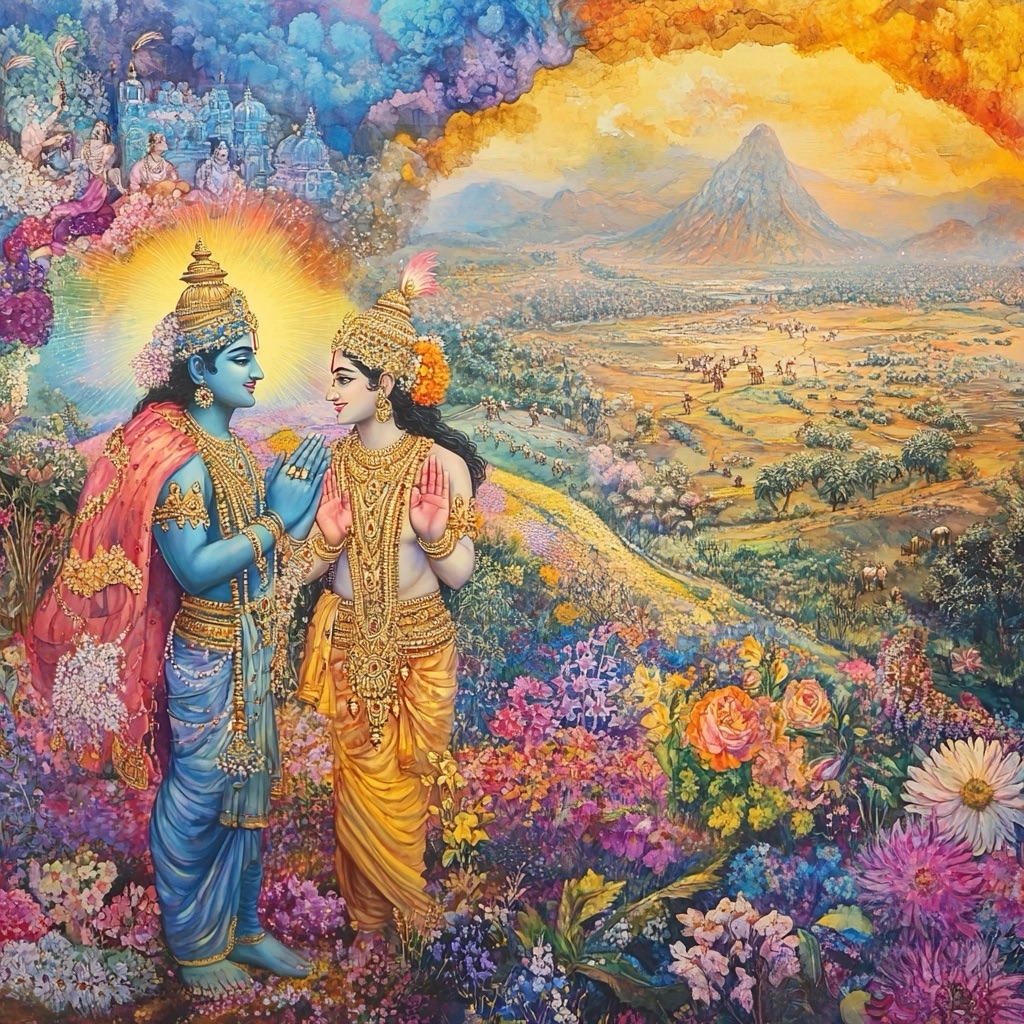
Experiencing the Gita, India’s Bible, with Yogananda
“The Essence of the Bhagavad Gita” by Paramahansa Yogananda represents one of the most profound and accessible interpretations of India’s beloved scripture. Published posthumously as “God Talks with Arjuna: The Bhagavad Gita,” this monumental work transforms the ancient dialogue between Krishna and Arjuna into a living spiritual guide for modern seekers. Yogananda, the pioneering yogi…
-

Sound Therapy Across the World: Where Science Meets Spirit
Sound therapy represents one of humanity’s oldest healing traditions, spanning continents and civilizations throughout recorded history. From the resonant chambers of ancient temples to modern therapeutic practices, the deliberate use of sound has remained a cornerstone of cultural, spiritual, and healing practices worldwide. The human relationship with sound begins with our most fundamental instrument—the voice.…
-

India’s Vegetable Mind: The Ancient Science of Plant Consciousness
The concept of “India’s vegetable mind” represents one of humanity’s oldest continuous explorations into the relationship between plant intelligence and human consciousness—a sophisticated system of knowledge that emerged over thousands of years on the Indian subcontinent. Far from primitive animism, this tradition developed through methodical observation, experimentation, and documentation, establishing a scientific framework for understanding…
-

DMT: The Spirit Molecule
In the vast landscape of human consciousness exploration, few substances have garnered the mystique and profound respect that surrounds N,N-Dimethyltryptamine, commonly known as DMT. Often referred to as “the spirit molecule”—a term popularized by Dr. Rick Strassman’s groundbreaking research—DMT stands at a fascinating intersection of neuroscience, anthropology, spirituality, and the fundamental mysteries of consciousness itself.…
-

The Eternal Dance: A Journey Through Psychedelic History
Ancient Whispers The old shaman sat by the fire, his weathered hands carefully sorting through a collection of dried plants. The young apprentice watched intently, knowing that tonight he would learn the most sacred of their traditions. “Our ancestors have known these plants for thousands upon thousands of years,” the shaman began, his voice like…
-

“Manufacturing Consent” and Chomsky’s Tools for Reclaiming Freedom
Navigating Truth in an Age of Manufactured Reality In today’s hypermedia landscape, where narratives are engineered with unprecedented sophistication, our ability to discern authentic truth has never been more challenged—or more essential. The intersection of Noam Chomsky’s groundbreaking analysis of manufactured consent with Marshall McLuhan’s profound understanding of how media reshapes consciousness offers invaluable insights…
-

Spiritual Emergency: Understanding Transformative Crises
Stanislav Grof, a Czech-born psychiatrist and researcher, pioneered the concept of “spiritual emergency” throughout his career, most notably in his 1989 book “Spiritual Emergency: When Personal Transformation Becomes a Crisis,” which he co-edited with his wife Christina Grof. The concept of spiritual emergency represents Grof’s revolutionary approach to understanding certain psychological crises as potentially transformative…
-

The Ecocyberdelic Renaissance: McKenna’s Vision of Integrated Technology and Nature
The profound visionary insight from Terence McKenna (1946-2000) offers us a roadmap toward what we may call an “ecocyberdelic renaissance” – a revolutionary synthesis of ancient shamanic wisdom, ecological consciousness, and transformative technology that could fundamentally reshape human civilization. In an era where AI development races ahead while ecological crises intensify and mental health epidemics…
-

Initiation: Love, Wisdom and Power
“Initiation” by Elizabeth Haich stands as one of the most remarkable spiritual memoirs of the 20th century, offering a profound exploration of consciousness that transcends the boundaries between ancient wisdom and modern understanding. The book operates on multiple levels simultaneously – as autobiography, spiritual teaching, and metaphysical investigation into the nature of existence itself. At…
-

Healing Chronic Stress with Emotional Intelligence
In a world that celebrates selfless giving, caregivers often find themselves caught in an impossible paradox: how to nurture others while sustaining their own wellbeing. Dr. Gabor Maté’s groundbreaking work “When the Body Says No” confronts this dilemma with compassionate clarity, revealing how our bodies ultimately enforce the boundaries we fail to establish consciously. Through…
-

The Obstacle as the Path: Lessons in Working with Energy
There exists a profound paradox in our human experience: what we perceive as obstacles are often our greatest teachers. The energies that disturb us—fear, anger, grief, confusion—are not punishments but invitations to deeper awareness and authentic freedom. When life presents challenges that make us uncomfortable, our instinct is to resist or escape. We see these…
-
The Journey of Growth: Maturity, Trust and Commitment
The journey of personal development begins in earliest childhood, as children absorb messages about identity and relationships through family dynamics, cultural influences, and peer interactions. Within families, relationships with parents or caregivers create powerful templates for future connections. Children who witness healthy relationship models—seeing adults express a full range of emotions, demonstrate care, and handle…
-
The Art of Giving Solitude: A Profound Expression of Love
Giving solitude is among the most sophisticated expressions of love, yet it remains largely uncelebrated in a culture that prioritizes constant connection. This seemingly paradoxical gift—of absence rather than presence—reveals a deep understanding of human nature and represents love in its most mature form. The Nature of True Solitude True solitude is not merely physical…
-

A Guide to Embryonic Breathing and Rebirthing
Embryonic breathing and rebirthing are two distinct but complementary breathing practices with profound effects on physical, mental, and spiritual wellbeing. Embryonic breathing originated in ancient Taoist traditions over 2,500 years ago and draws inspiration from the natural breathing pattern of a fetus in the womb. It focuses on diaphragmatic breathing with minimal physical movement, emphasizing…
-
-

The “Cash Value” of Religious Experience: Insights and Adaptability
William James revolutionized our understanding of spirituality by examining what religious experiences actually do in people’s lives rather than focusing on abstract theology. His pragmatic concept of “cash value” asks simple but profound questions: Does a spiritual experience make someone more loving? More ethical? Better equipped to face life’s challenges? For James, these practical outcomes…
-

The Spectrum of Consciousness: An Integral Approach to Human Development
The image depicts a color-coded spectrum of consciousness development that draws from integral theory, developmental psychology, and cultural evolution. This framework represents not just a linear progression, but rather a complex, multidimensional unfolding of human consciousness across history and within individuals. The evolutionary journey begins with what’s labeled “Archaic” consciousness (infrared), characterized by raw survival…
-

Communing with The Inner Vibration of Om
Swami Kriyananda emphasizes the profound importance of communing with Aum as a means to spiritual awakening. He begins by reminding us that we are all divine beings, made in God’s image, and the only difference between an enlightened master and an ordinary person is the level of spiritual awakening. Once we awaken, we too will…
-

Bone Density and Shaolin Monks: Where Ancient Wisdom Meets Regenerative Medicine
The remarkable bone density observed in Shaolin monks represents one of the most compelling intersections of ancient practice and modern scientific understanding in the field of regenerative medicine. These Chinese martial artists have developed extraordinary skeletal strength through systematic training methods that create controlled bone stress—a practice called “Iron Body” (Tie Bai Gong) that deliberately…
-

Medical Meditation
In today’s increasingly complex healthcare landscape, a promising new approach merges the ancient wisdom of Raja Yoga with modern medical practice to create a structured meditation program designed specifically for clinical settings. Table of Contents — This innovative framework distills the eight limbs of Raja Yoga—from ethical foundations to meditation practices—into accessible interventions that complement…
-

Putting Down the Burning Coal, Letting Go
Buddhist monk, Ajahn Chay, a vessel of pure being, was immersed in the symphony of existence. Sunlight, a vibrant tapestry of light and shadow, danced upon the forest floor. His mind, a tranquil mirror, reflected the boundless love that permeates all beings. Suddenly, crack! The unity of Ajahn’s heart momentarily formed into the illusion of…
-

Neuroplasticity: Brainwaves, Meditation, and Relaxation
Everyday, the world gives us opportunities to expand into a new version of ourselves in ways that are more loving and authentic… We simply have the opportunity to witness the importance of relaxation and gratitude in everyday life. Gratitude has been shown to detoxify emotions and increase brain activity in the pre-frontal cortex. (UC Berkeley)…
-

Breathing, The Ocean, and Emotional Healing
I know a lot of people recovering from this or that, and at times, I remember how powerful of a role the ocean plays in reconnecting to a sense of inner wholeness, which is exemplified through the graceful movements of sea creatures like jellies, whales, and turtles — and the simple, relatable, childlike wonder that…
-

CranioSacral Therapy, Laying of Hands, and Dolphins
The “laying of hands” holds a special place in many traditional healing systems around the world and palpation is still used in modern medicine as a diagnostic measure often surpassing the mot advanced medical tools and software. Coming into a place of wholeness and reintegration often takes a significant amount of energy on behalf of the individual, and facilitating…
-

Healing Trauma and Spiritual Growth: Peter Levine and Thomas Huebl
Welcome back, Light Being Today offers a deep dive into relating individual trauma to the collective, seeing these patterns within and around us, growing into being of greater service through healing. Peter Levine, founder of Somatic Experiencing and a prominent figure in trauma healing, and Thomas Hübl, a spiritual teacher and mystic focused on collective…
-

Compassion and Social Action: Ram Dass and Thich Nhat Hanh
Today offers a deep dive into mindfulness, compassion, deep listening, holding anger with tenderness, and the role of technology in social action. The 1995 World Forum interview between spiritual teachers Ram Dass and Thich Nhat Hanh, explores mindfulness, anger, compassion, interbeing, and the transformative power of spiritual practice. This dialogue offers a profound examination of…
-

Adapting Eastern Practices to Western Life
Today offers a deep dive into mindfulness and self-regulation, common experiences when beginning, and bridging the wisdom of East and West with a few practical methods that anyone can start with today. Plus, this groovy video of Ram Dass chanting. Here’s a perspective on adapting Eastern practices to Western life while maintaining their essence: Start…

-
Subscribe
Subscribed
Already have a WordPress.com account? Log in now.
 Light Being ॐ